Common Tesamorelin Vial Sizes: 2mg, 5mg, and 10mg Explained
A reference guide to the common tesamorelin vial sizes 2mg 5mg 10mg — what each label means, how concentration is calculated, and why listings differ.
Reviewed by Yuki Tanaka, PhD, molecular biologist ·
Yuki Tanaka, PhD is a molecular biologist with a doctorate from Osaka University and postdoctoral training at Stanford School of Medicine, specializing in growth hormone axis biology, GHRH receptor signaling, and synthetic peptide analog mechanisms.
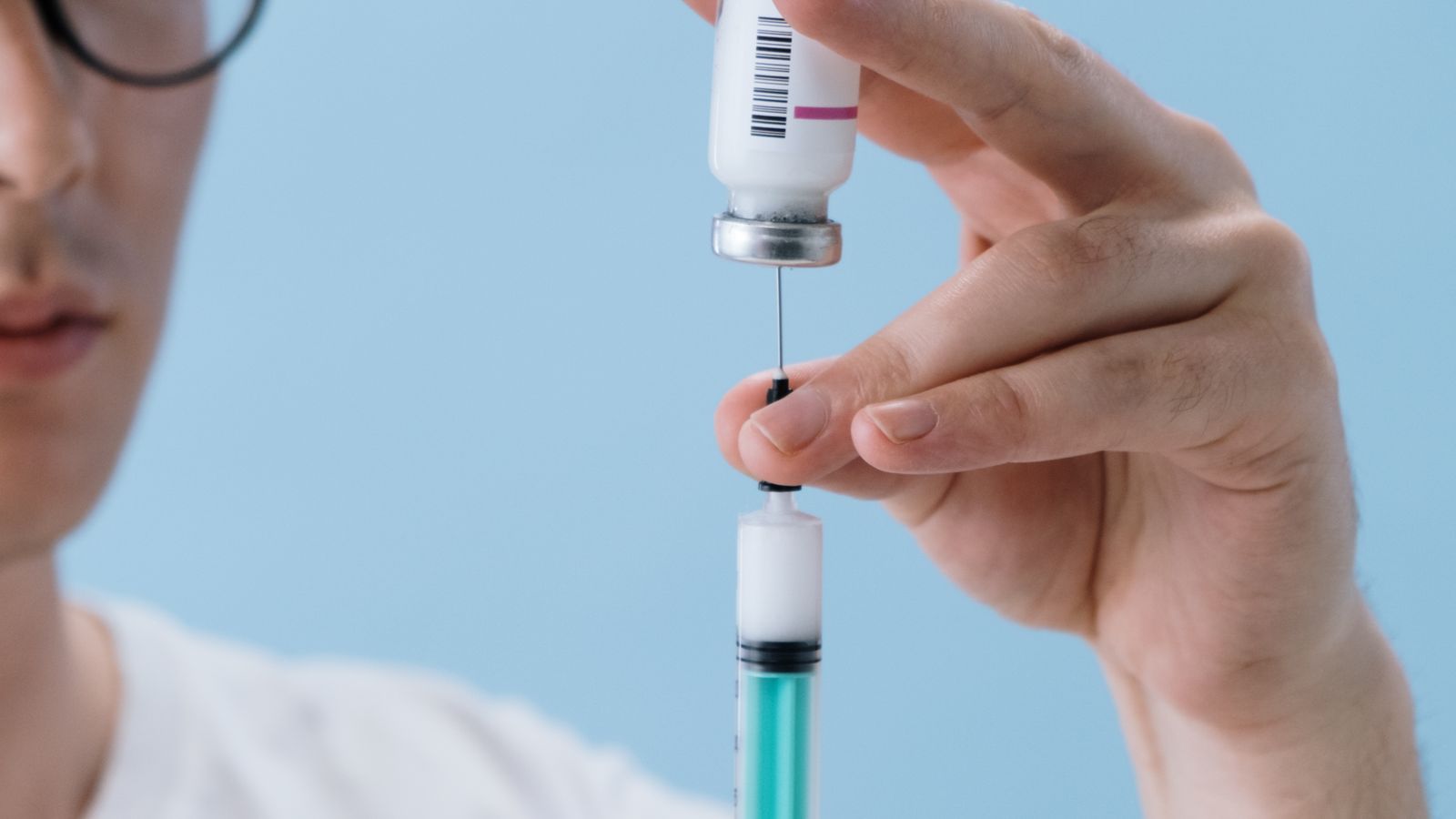
Tesamorelin listings are most often published in three vial sizes: 2mg, 5mg, and 10mg. These numbers describe the mass of lyophilized peptide sealed in the vial before any liquid is added, not a dose or a concentration. Understanding what the label means, and how it relates to the concentration after reconstitution, is the first step in reading any tesamorelin listing correctly.
What the Vial Size Number Actually Represents
The 2mg, 5mg, or 10mg printed on a tesamorelin vial refers to the total mass of freeze-dried peptide inside, measured in milligrams. It says nothing about volume or strength on its own. A 10mg vial is not automatically “stronger” per drop than a 2mg vial — concentration only exists once a specific volume of bacteriostatic water has been added. Vial size is a packaging and inventory unit; concentration is a calculated property that depends on both the vial size and the reconstitution volume chosen.
This distinction matters when comparing catalog listings across vendors. A supplier offering a 5mg vial and one offering a 10mg vial are not necessarily offering different strengths of the same product — they may simply be offering different total quantities of the same underlying material.
Why Vendors Offer Multiple Vial Sizes
Common tesamorelin vial sizes of 2mg, 5mg, and 10mg exist largely for inventory and packaging convenience rather than any fixed formulation standard. Smaller vials (2mg) suit lower-volume research orders or shorter-duration protocols, where less material needs to be stored and used within a given timeframe. Larger vials (10mg) reduce the number of individual containers, vial stoppers, and reconstitution events needed to reach the same total mass of peptide across a longer research timeline.
Some catalogs also list a 5mg size as a middle option, balancing the two considerations. None of these sizes represents a “standard” dose — the vial size only sets an upper bound on how much lyophilized material is available before reconstitution.
How Concentration Is Calculated
Once bacteriostatic water is added to a lyophilized vial, the resulting concentration is calculated as:
concentration (mg/mL) = vial size (mg) ÷ volume of bacteriostatic water added (mL)
This is a simple ratio. The same 5mg vial can yield very different concentrations depending on how much diluent is used — more diluent lowers the concentration, less diluent raises it. Vial size and reconstitution volume are two separate variables, and neither determines the other.
Worked Example
Take a 5mg vial reconstituted with 2 mL of bacteriostatic water.
concentration = 5 mg ÷ 2 mL = 2.5 mg/mL
Converting to micrograms for finer reference: 2.5 mg/mL is the same as 2500 mcg/mL, since 1 mg equals 1000 mcg.
On a U-100 insulin syringe, where 1 mL corresponds to 100 unit markings on the barrel, each unit line on that syringe corresponds to 0.01 mL of solution. At a concentration of 2.5 mg/mL, each unit line therefore corresponds to 25 mcg of peptide (2500 mcg ÷ 100 units = 25 mcg per unit). This figure describes only the arithmetic relationship between the syringe markings and the solution concentration — it is not a dosing instruction.
Comparing the Three Common Sizes
The table below shows how the same reconstitution volume produces different concentrations across the three common vial sizes, illustrating why the vial size alone is not a useful comparison point without also knowing the diluent volume.
| Vial Size | Diluent Added | Resulting Concentration | Per Unit (U-100 syringe) |
|---|---|---|---|
| 2 mg | 2 mL | 1 mg/mL (1000 mcg/mL) | 10 mcg |
| 5 mg | 2 mL | 2.5 mg/mL (2500 mcg/mL) | 25 mcg |
| 10 mg | 2 mL | 5 mg/mL (5000 mcg/mL) | 50 mcg |
Note that the “per unit” column changes proportionally with vial size when the diluent volume is held constant. A listing that only states vial size without stating the intended reconstitution volume has not actually communicated a concentration.
Reading Vial Size in Vendor Listings
When comparing tesamorelin listings across a catalog, vial size alone is an incomplete data point. Two useful pieces of information to look for alongside it are the total peptide mass per vial and any reconstitution guidance the listing provides, since the concentration only becomes meaningful once both mass and volume are known. Some catalogs document their reference material directly on the compound’s own page, such as heezresearch.com/product/tesamorelin/, which can clarify how a given listing expects vial size and reconstitution to be presented. Cross-referencing multiple listings, as peer tesamorelin listing catalogs does across vendors, can also help identify whether a price difference reflects vial size, purity documentation, or packaging rather than a difference in the underlying material.
For anyone working through the arithmetic by hand, an external reconstitution calculator such as peptcalc.com can serve as a cross-check against manually computed concentration and per-unit figures.
Summary
The 2mg, 5mg, and 10mg figures seen across tesamorelin listings describe the total lyophilized mass in a vial, not a concentration or a dose. Concentration only becomes defined once a specific volume of bacteriostatic water is added, following the simple ratio of mass divided by volume. Reading a listing accurately means looking past the vial size number alone and checking whether reconstitution volume is specified, since that second variable is what actually determines the strength of the resulting solution.
A note on how to read this
This article is written for research and educational reference. The materials described are sold for laboratory research and are not for human consumption. Nothing here is dosing guidance, a prescription, or a clinical recommendation.