Chain of Custody Documentation for Tesamorelin Research Shipments
What chain of custody documentation for tesamorelin research shipments should include, why gaps in it matter, and how to read it alongside a COA.
Reviewed by Yuki Tanaka, PhD, molecular biologist ·
Yuki Tanaka, PhD is a molecular biologist with a doctorate from Osaka University and postdoctoral training at Stanford School of Medicine, specializing in growth hormone axis biology, GHRH receptor signaling, and synthetic peptide analog mechanisms.
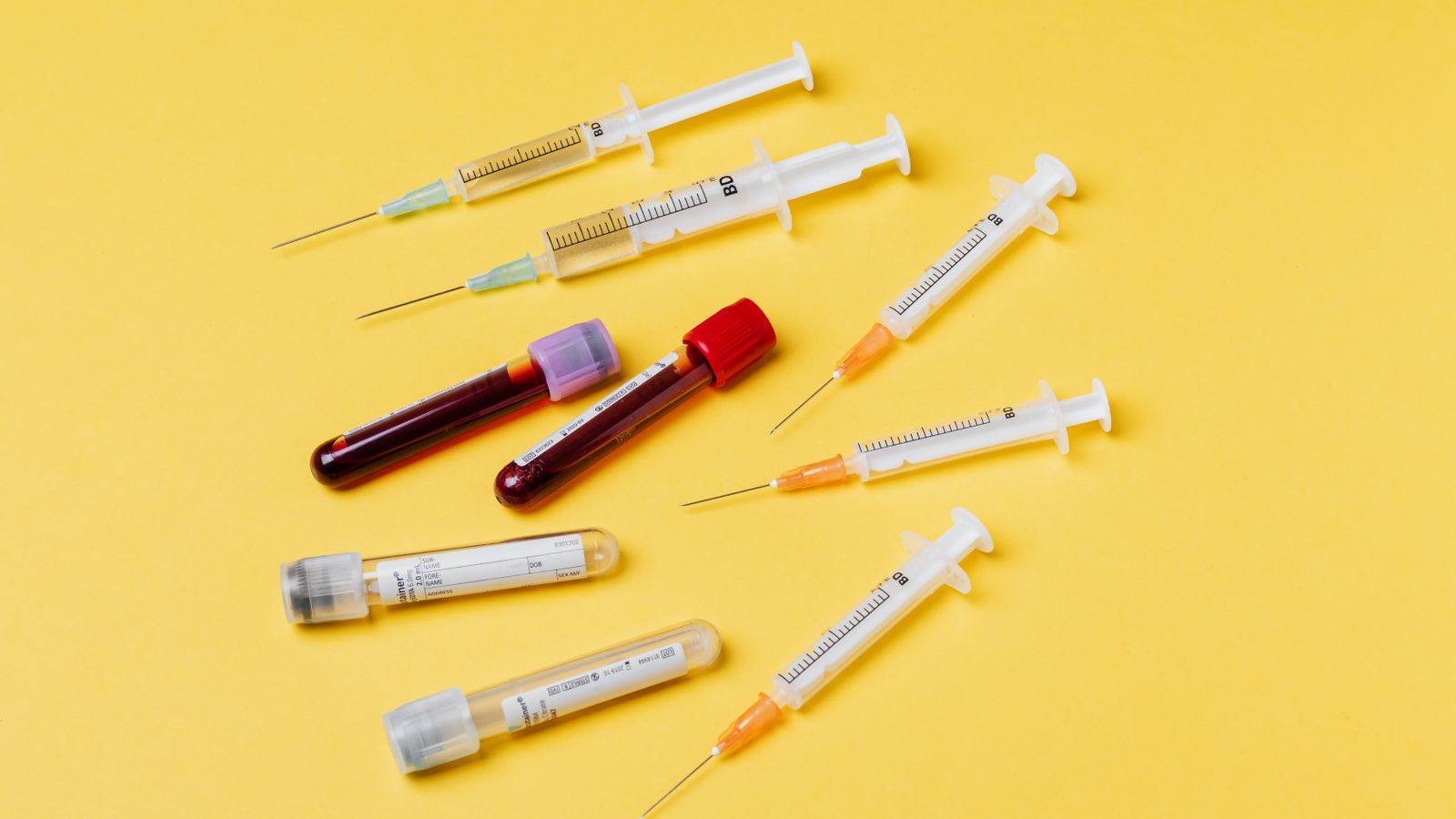
Chain of custody documentation for tesamorelin research shipments is the paper trail that connects a vial sitting on a bench to the specific lot it was manufactured from, the route it traveled, and the conditions it was kept under along the way. A Certificate of Analysis tells a researcher what a lot contained at the moment it was tested. Chain of custody documentation tells a researcher whether the vial in hand is still that same, unaltered lot by the time it arrives. The two records answer different questions, and a listing that provides one without the other leaves half the traceability picture missing.
What the Documentation Set Actually Covers
A complete custody record for a research shipment is less a single document than a stack of smaller ones, each covering one link in the chain:
- Lot or batch identifier, matched against the COA for that same lot
- Packaging and shipping date, along with the carrier and tracking reference used
- Temperature control method during transit, such as cold packs or insulated packaging, and whether that method was monitored
- Handling transfer points — who packed the shipment, who received it, and any intermediate custody transfer
- Storage conditions on arrival, including how quickly the shipment was moved from ambient transit conditions to proper storage
None of these records substitute for a COA’s purity and identity data. What they add is continuity: confirmation that the lot tested on the COA is the same lot that physically reached the researcher, without an undocumented gap where conditions or contents could have changed.
Why Reproducibility Depends on This Continuity
Chain of custody documentation for tesamorelin research shipments matters most in exactly this kind of axis-focused work, where a single undocumented handling gap can undercut an otherwise well-designed study. Research built around the growth hormone/IGF-1 axis is unusually sensitive to material consistency, because so much of the published literature in this area treats precise material characterization as a baseline requirement rather than a nicety. Work examining growth hormone/IGF-1 axis activity during pregnancy in acromegaly, for instance, depends on carefully characterized hormone measurements to draw any conclusion at all (Pregnancy in acromegaly). Studies tracing ghrelin’s role along the growth hormone/insulin-like growth factor-1 axis during endotoxemia similarly rely on tightly controlled experimental inputs to isolate the variable under study (Role of ghrelin on growth hormone/insulin-like growth factor-1 axis during endotoxemia). And research into how Klotho interacts with the growth hormone/IGF-1 axis illustrates how many interacting variables a single axis-focused study has to hold constant to produce an interpretable result (Klotho and the Growth Hormone/Insulin-Like Growth Factor 1 Axis). None of that literature is about tesamorelin sourcing directly, but it illustrates the underlying principle: axis-level research is only as reliable as the material inputs feeding it, and an undocumented gap in a shipment’s custody record introduces a variable no study design accounts for.
Reading a Custody Record Against a COA
The two documents are read together, not separately. A COA confirms identity and purity for lot number X at the time of testing. A custody record confirms that the vial labeled lot X, received on a given date, is the same physical unit that COA describes, and that it was not left at an uncontrolled temperature for an extended period between the lab and the recipient. A listing can have an impeccable COA and still leave a documentation gap if there is no record of how the shipment was handled in transit — the purity figure on the COA says nothing about whether that purity was preserved by the time the vial arrived.
Comparing Documentation Completeness
| Element | Confirms | Typically found in |
|---|---|---|
| Lot-matched COA | Identity and purity of the tested batch | Supplier product page or included insert |
| Shipping and tracking record | Transit route and timing | Carrier confirmation, order records |
| Temperature control log | Whether cold-chain conditions were maintained | Cold-chain shipment providers, not all suppliers |
| Custody transfer log | Who handled the shipment at each stage | Rarely published; more common in institutional transfers |
| Storage-on-arrival note | Conditions once the shipment reached its destination | Internal lab or buyer record, not supplier-provided |
Most consumer-facing listings stop at the first row. Temperature logs and formal custody transfer records are more common in institutional or bulk transfers than in individual vial purchases, which means an individual buyer is often left to document arrival conditions themselves if the supplier does not provide a transit record.
What a Documentation Gap Looks Like in Practice
Weak chain of custody documentation for tesamorelin research shipments does not always announce itself as a gap. A shipment can arrive with a matching COA and no indication anywhere that the package sat in an unclimate-controlled location for an extended stretch of transit. Without a temperature record, there is no way to distinguish a vial that traveled under controlled conditions from one that did not, even though both would carry the same lot number and the same COA. This is the practical reason custody documentation matters separately from a COA — the COA is a snapshot from before shipping, and without a custody record, everything after that snapshot is undocumented by default.
Evaluating a Supplier’s Documentation Practice
One useful check is comparing the custody paperwork attached to this tesamorelin vial against documentation practices across a supplier’s wider catalogue, since consistent paperwork across many listings signals a systemic practice rather than a one-off compliance effort applied to a single product. A supplier that documents lot matching, shipping method, and storage conditions consistently across its full catalogue is demonstrating a process, not just producing paperwork for one listing under scrutiny. A supplier that only volunteers a COA, with nothing describing how the shipment was handled after leaving the lab, has provided a partial record regardless of how clean that COA looks.
Summary
Chain of custody documentation for tesamorelin research shipments exists to close the gap a COA leaves open — it confirms that the tested lot and the received vial are the same, and that nothing about the shipping and handling process introduced an unrecorded variable. A COA alone answers what a lot contained at the time of testing; custody documentation answers whether that lot arrived intact and unaltered. Evaluating a listing’s documentation completeness means checking for both, and treating the absence of transit and handling records as a real gap rather than an incidental omission.
A note on how to read this
This article is written for research and educational reference. The materials described are sold for laboratory research and are not for human consumption. Nothing here is dosing guidance, a prescription, or a clinical recommendation.